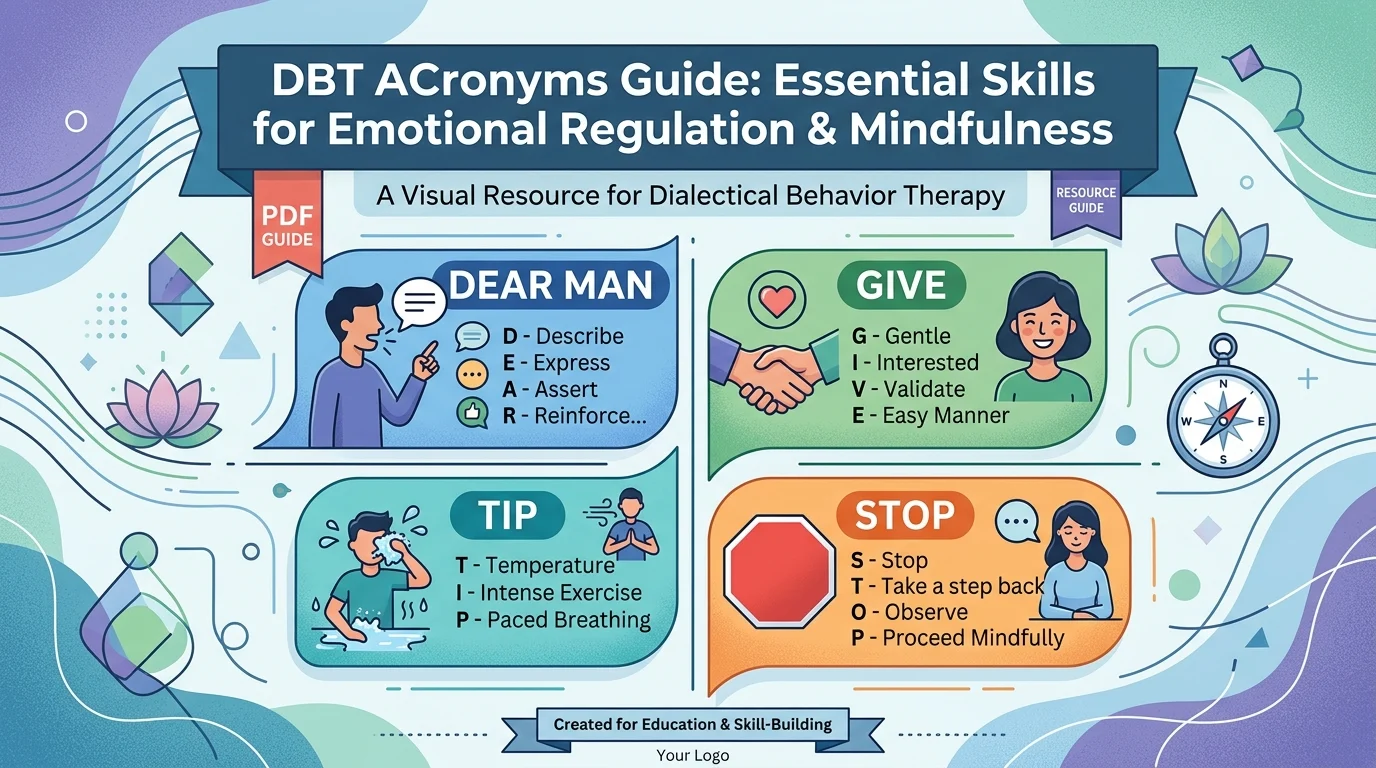
Dialectical Behavior Therapy, commonly known as DBT, is a structured psychological treatment designed to help people manage intense emotions, improve relationships, and develop healthier coping strategies. One of the most effective features of DBT is its use of acronyms, which simplify complex psychological skills into easy-to-remember tools.
These DBT acronyms are widely used by therapists, students, and individuals learning emotional regulation techniques. They are especially helpful during moments of stress, anxiety, or emotional overwhelm because they provide quick, practical steps to follow.
This article explains the most important DBT acronyms in detail, their meanings, how they work, and how they are used in real-life situations.
What Is DBT?
Dialectical Behavior Therapy (DBT) is a form of cognitive-behavioral therapy developed to help people:
- Manage strong emotions
- Reduce self-destructive behaviors
- Improve communication skills
- Build emotional resilience
- Develop mindfulness and awareness
DBT is commonly used in mental health treatment and skill-building programs.
Why DBT Uses Acronyms
DBT uses acronyms because they:
- Make complex skills easy to remember
- Help people use techniques during emotional crises
- Improve learning and memory retention
- Provide step-by-step coping instructions
- Simplify therapy practice outside sessions
Instead of remembering long explanations, individuals can recall a single word like TIPP or DEAR MAN and follow structured steps.
Core DBT Acronyms and Their Meanings
1. ACCEPTS (Distress Tolerance Skill)
ACCEPTS is used to distract the mind from emotional pain.
- A = Activities (do something engaging)
- C = Contributing (help others)
- C = Comparisons (compare to worse situations)
- E = Emotions (create opposite emotions)
- P = Push away (mentally step back)
- T = Thoughts (focus on something else)
- S = Sensations (use physical sensations)
👉 This skill helps redirect attention during emotional distress.
2. IMPROVE (Making Difficult Moments Better)
IMPROVE helps individuals cope with stressful situations in healthier ways.
- I = Imagery (visualize peaceful scenes)
- M = Meaning (find purpose in the situation)
- P = Prayer (spiritual support or reflection)
- R = Relaxation (deep breathing or calm activities)
- O = One thing in the moment (focus on now)
- V = Vacation (mental break from stress)
- E = Encouragement (self-motivation)
👉 This skill improves emotional stability during challenges.
3. TIPP (Fast Emotional Crisis Control)
TIPP is used when emotions feel overwhelming and immediate calming is needed.
- T = Temperature (cold water or ice to calm the body)
- I = Intense exercise (release emotional energy)
- P = Paced breathing (slow, controlled breathing)
- P = Progressive muscle relaxation
👉 This skill quickly reduces emotional intensity.
4. DEAR MAN (Communication Skills)
DEAR MAN helps people express needs clearly and confidently.
- D = Describe (state facts)
- E = Express (share feelings)
- A = Assert (ask clearly)
- R = Reinforce (explain benefits)
- M = Mindful (stay focused)
- A = Appear confident (body language)
- N = Negotiate (be flexible)
👉 Used in conflict resolution and communication.
5. GIVE (Relationship Effectiveness)
GIVE helps maintain healthy relationships.
- G = Gentle (be kind)
- I = Interested (listen actively)
- V = Validate (acknowledge feelings)
- E = Easy manner (stay relaxed)
👉 Improves social connection and trust.
6. FAST (Self-Respect Skill)
FAST helps individuals maintain self-respect in communication.
- F = Fair (be fair to yourself and others)
- A = No excessive apologies
- S = Stick to values
- T = Truthful
👉 Helps protect self-esteem and boundaries.
7. PLEASE (Emotional Stability Through Health)
PLEASE focuses on physical health to improve emotional control.
- P = Physical health care
- L = Balanced eating
- E = Avoid mood-altering substances
- A = Sleep properly
- S = Exercise regularly
- E = Treat illness
👉 Strong physical health supports emotional balance.
How DBT Acronyms Are Used in Real Life
DBT acronyms are used in many everyday situations:
During Stress
Someone feeling overwhelmed may use TIPP to calm down quickly.
In Relationships
A person may use DEAR MAN to communicate needs respectfully.
During Emotional Pain
Someone may use ACCEPTS to distract their mind from distress.
For Self-Control
PLEASE helps maintain healthy lifestyle habits.
Benefits of DBT Acronyms
DBT acronyms provide many benefits:
- Easy to remember during emotional distress
- Practical step-by-step guidance
- Helps reduce anxiety and stress
- Improves communication skills
- Encourages healthier habits
- Supports emotional regulation
Common Mistakes When Using DBT Skills
1. Not Practicing Regularly
DBT skills work best with practice, not just reading.
2. Using Only One Skill
Different situations require different acronyms.
3. Expecting Instant Results
Emotional regulation takes time and consistency.
Simple Memory Guide
- ACCEPTS = Distract your mind
- IMPROVE = Make moments better
- TIPP = Calm crisis fast
- DEAR MAN = Communicate clearly
- GIVE = Build relationships
- FAST = Protect self-respect
- PLEASE = Maintain emotional balance
Final Summary
DBT acronyms are powerful tools designed to simplify emotional regulation, communication, and mental health skills. By turning complex therapy techniques into easy-to-remember words like ACCEPTS, TIPP, and DEAR MAN, DBT helps individuals manage emotions more effectively in real-life situations.
These acronyms are widely used in therapy, self-help programs, and mental wellness education because they are practical, structured, and easy to apply.
Understanding and practicing DBT skills can significantly improve emotional resilience, communication, and overall mental well-being.