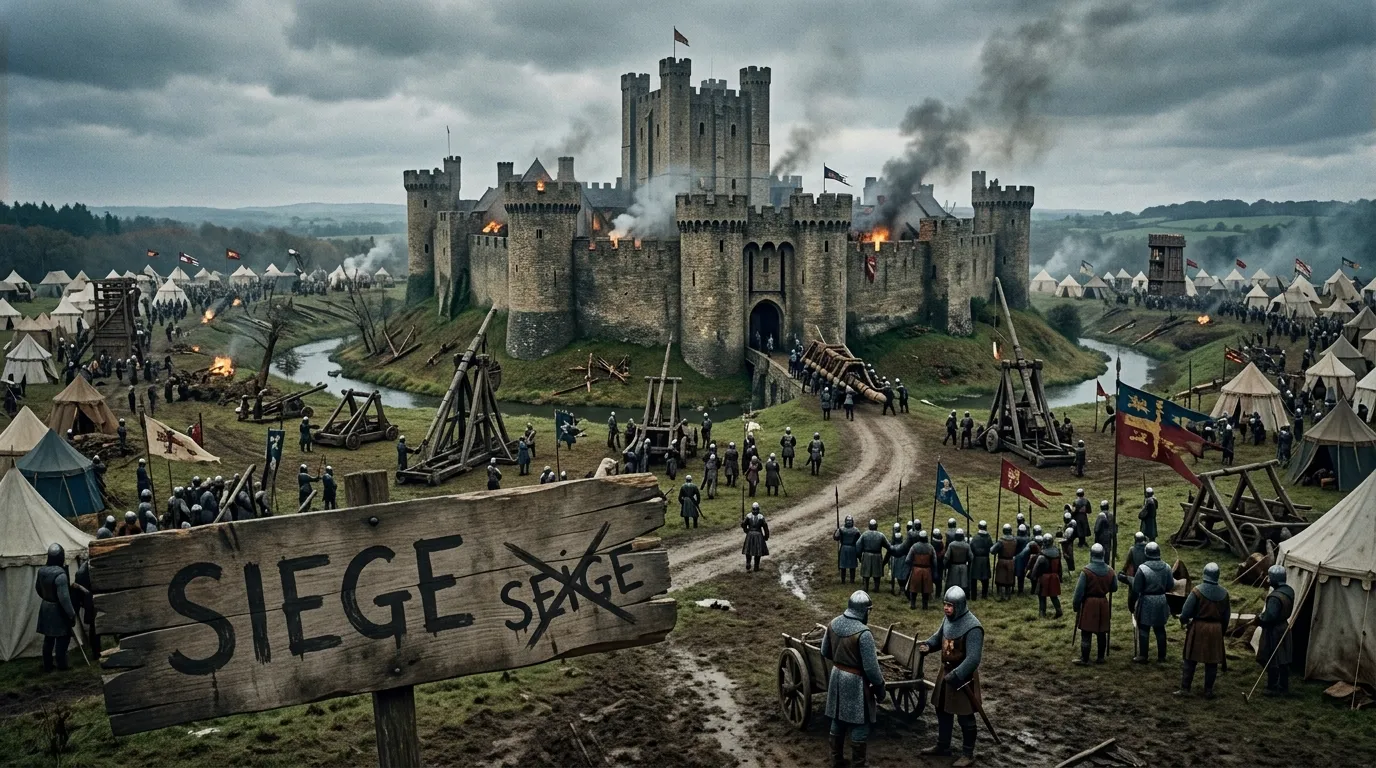
Have you ever wondered whether the correct spelling is siege or seige? You’re not alone. This is a common English spelling mistake because the letters “i” and “e” are easy to reverse. Many people accidentally write seige, but only one spelling is correct in standard English.
The correct spelling is siege. It is a noun that describes a situation in which a place is surrounded by an army or group trying to force its surrender. The word can also be used more generally to describe a prolonged period of pressure, difficulty, or attack.
The spelling seige is incorrect. It is a common misspelling caused by reversing the “i” and “e” in the word. Standard English dictionaries recognize only siege as the correct spelling.
In this guide, you’ll learn the correct spelling, meaning, pronunciation, grammar rules, US vs. UK usage, examples, common mistakes, memory tricks, and frequently asked questions about siege or seige.
Quick Answer
| Spelling | Correct? |
|---|---|
| ✅ Siege | Correct |
| ❌ Seige | Incorrect |
Siege means a military operation in which a place is surrounded and attacked to force surrender.
Examples
- The city endured a long siege.
- The army laid siege to the castle.
- The fortress was under siege for several months.
What Does “Siege” Mean?
Siege is primarily a noun.
It describes a military situation in which an army surrounds a city, fortress, or other place to force those inside to surrender.
Examples
- The castle survived a long siege.
- The city was under siege.
- The army began a siege of the fortress.
The word can also be used figuratively.
Figurative Examples
- The company came under siege from critics.
- The politician faced a siege of questions from reporters.
Why Is “Seige” Incorrect?
The spelling seige is incorrect because the correct order of the vowels is:
S-I-E-G-E
Not:
❌ S-E-I-G-E
The word siege is another example of a word that does not follow the simple “i before e” rule in the expected way.
Grammar Role of Siege
Siege is a noun.
Common Expressions
- Under siege
- Lay siege to
- A long siege
- A military siege
- Siege warfare
Examples
- The city was under siege.
- The army laid siege to the fortress.
- The defenders survived the siege.
Siege in American English
American English uses siege.
Examples
- The city was under siege.
- The army laid siege to the castle.
- The fortress survived a long siege.
- The town came under siege.
Siege in British English
British English also uses siege.
Examples
- The city remained under siege.
- The army laid siege to the fortress.
- The castle endured a lengthy siege.
- The town came under siege.
There is no spelling difference between American and British English.
Siege vs Seige
| Feature | Siege | Seige |
|---|---|---|
| Correct spelling | ✅ Yes | ❌ No |
| Dictionary word | Yes | No |
| Meaning | Surrounding a place to force surrender | No meaning |
| Part of speech | Noun | Incorrect spelling |
| American English | Yes | No |
| British English | Yes | No |
Pronunciation
Siege
UK IPA: /siːdʒ/
US IPA: /siːdʒ/
Pronunciation:
SEEJ
It rhymes with:
- Page
- Stage
- Cage
Common Uses of “Siege”
Military History
- Siege of a city
- Siege of a castle
- Siege warfare
Historical Writing
- A lengthy siege
- A successful siege
Figurative Use
- Under siege
- Come under siege
Siege vs Similar Words
| Word | Meaning |
|---|---|
| Siege | Surrounding a place to force surrender |
| Blockade | Preventing movement or supplies |
| Assault | A forceful attack |
| Invasion | Entering a place with military force |
| Encirclement | Surrounding an area |
Examples
- The army began a siege.
- The navy imposed a blockade.
- The soldiers launched an assault.
Common Mistakes
Incorrect
❌ The city was under seige.
Correct
✅ The city was under siege.
Incorrect
❌ The army laid seige to the castle.
Correct
✅ The army laid siege to the castle.
Incorrect
❌ The fortress survived a long seige.
Correct
✅ The fortress survived a long siege.
Incorrect
❌ The town came under seige.
Correct
✅ The town came under siege.
Real-Life Examples
History
- The castle endured a long siege.
- The city was under siege for months.
Military
- The army laid siege to the fortress.
- Siege warfare was common in ancient times.
Figurative Use
- The company came under siege from critics.
- The politician was under siege from the media.
American English Example Sentences
- The city was under siege.
- The army laid siege to the castle.
- The fortress survived a long siege.
- The town came under siege.
- The siege lasted for several months.
- The soldiers prepared for a siege.
- The castle resisted the siege.
- The army ended the siege.
- The historical siege changed the region.
- The company came under siege from critics.
British English Example Sentences
- The city remained under siege.
- The army laid siege to the fortress.
- The castle endured a lengthy siege.
- The town came under siege.
- The siege continued for many weeks.
- The soldiers prepared for the siege.
- The fortress resisted the siege.
- The army eventually ended the siege.
- The historical siege had lasting consequences.
- The company came under siege from critics.
Easy Memory Tricks
Remember the Correct Order
SIEGE
The vowel order is:
I → E
Think of “Field”
Both siege and field contain:
I before E
This can help you remember the correct spelling.
Practice
Write it three times:
Siege
Siege
Siege
Frequently Asked Questions
Is siege or seige correct?
Siege is the correct spelling.
Is seige a real word?
No. It is a common spelling mistake.
What does siege mean?
A siege is a military operation in which a place is surrounded and attacked to force surrender.
Is siege a noun?
Yes.
How do you spell siege?
S-I-E-G-E
Is the spelling different in British and American English?
No. Both use siege.
How do you pronounce siege?
SEEJ
People Also Ask
Why do people spell siege as seige?
Because the letters “i” and “e” are often reversed when people spell the word. The correct spelling is siege.
Is siege used in formal writing?
Yes. It is commonly used in historical, military, academic, literary, and figurative writing.
What’s the easiest way to remember siege?
Remember the spelling pattern:
S-I-E-G-E
You can also connect it with field, which also has i before e.
What’s the difference between a siege and a blockade?
A siege usually involves surrounding a place to force surrender, while a blockade focuses on preventing movement, supplies, or access.
Conclusion
If you’re choosing between siege and seige, the correct spelling is siege. Seige is a common spelling mistake caused by reversing the “i” and “e.”
Siege is a noun that describes the surrounding and attacking of a place to force surrender. It is widely used in military history, historical writing, and figurative expressions such as “under siege.” The spelling is the same in both American and British English. A simple way to remember it is to focus on the correct letter order: S-I-E-G-E.


