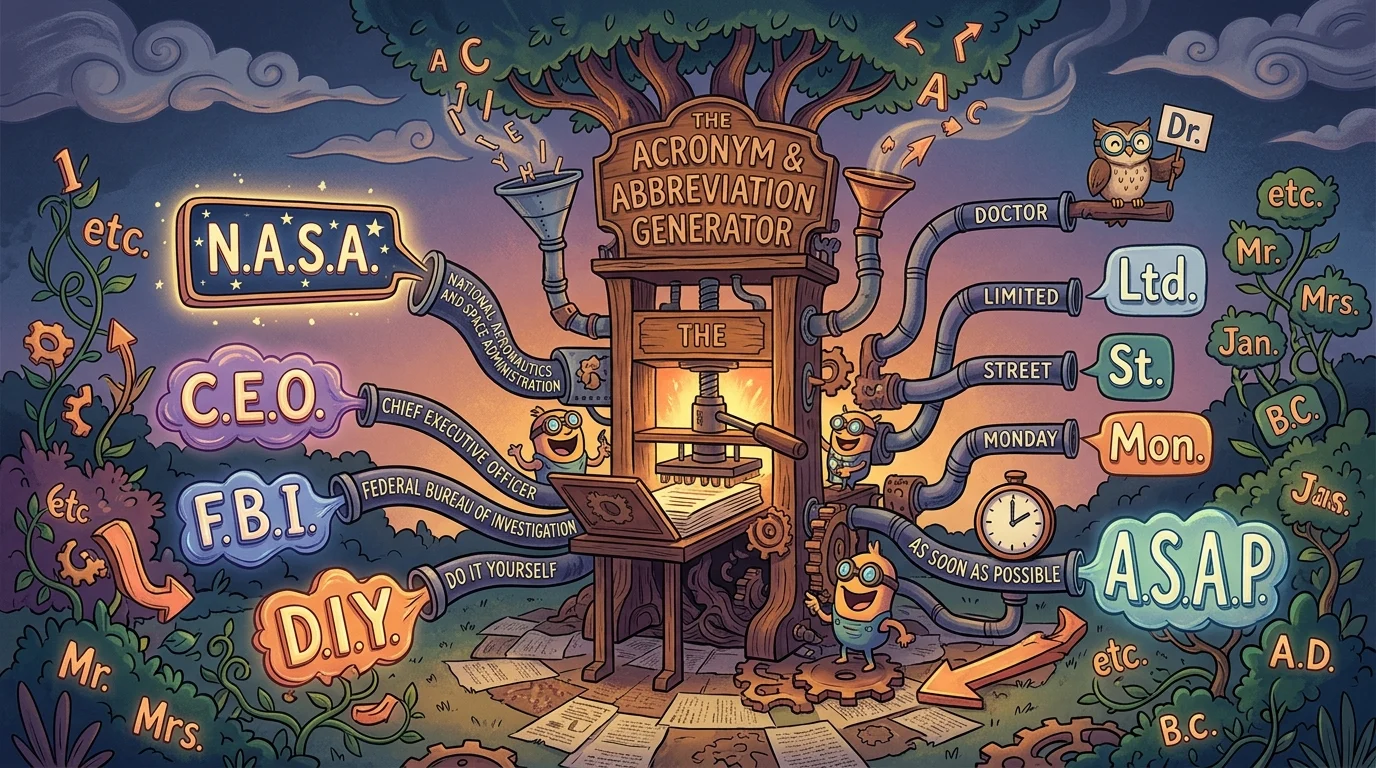
In modern communication, people often use shorter forms of words to save time and make writing easier. These shortened forms are called acronyms and abbreviations. They are used in education, business, medicine, texting, technology, and everyday conversation.
Understanding the difference between acronyms and abbreviations is important because they may look similar, but they work in different ways. This guide explains both in a simple, clear, and practical way.
What Are Acronyms?
An acronym is a word formed from the first letters of a phrase, and it is pronounced as a single word.
Examples of Acronyms:
- NASA = National Aeronautics and Space Administration
- UNESCO = United Nations Educational, Scientific and Cultural Organization
- LASER = Light Amplification by Stimulated Emission of Radiation
- SCUBA = Self-Contained Underwater Breathing Apparatus
👉 Acronyms are spoken as words, not letter by letter.
What Are Abbreviations?
An abbreviation is a shortened form of a word or phrase. It may be pronounced letter by letter or as a shortened word.
Examples of Abbreviations:
- Dr. = Doctor
- Mr. = Mister
- etc. = et cetera
- St. = Street or Saint
- Gov. = Governor
👉 Abbreviations are used to make writing shorter and faster.
Key Difference Between Acronyms and Abbreviations
| Feature | Acronyms | Abbreviations |
|---|---|---|
| Formation | First letters of words | Shortened version of words |
| Pronunciation | Spoken as a word | Letter-by-letter or shortened |
| Examples | NASA, UNESCO, SCUBA | Dr., etc., Mr., Jan. |
| Purpose | Create new pronounceable words | Save writing space |
| Usage | Technology, organizations | Titles, dates, writing |
Why Acronyms and Abbreviations Are Important
They are used widely because they:
- Save time in writing and speaking
- Make communication faster
- Reduce long complex phrases
- Improve readability in documents
- Standardize professional language
- Help in digital communication (texts, emails, social media)
Common Acronyms in Everyday Life
Technology
- Wi-Fi = Wireless Fidelity
- USB = Universal Serial Bus
- HTML = HyperText Markup Language
Government & Organizations
- FBI = Federal Bureau of Investigation
- WHO = World Health Organization
- UN = United Nations
Education
- BA = Bachelor of Arts
- MA = Master of Arts
- PhD = Doctor of Philosophy
Common Abbreviations in Everyday Life
Time and Dates
- Jan. = January
- Mon. = Monday
- p.m. = post meridiem
Titles
- Prof. = Professor
- Capt. = Captain
- Rev. = Reverend
Writing Shortcuts
- etc. = and so on
- e.g. = for example
- i.e. = that is
Real-Life Usage Examples
Education
“The student earned a B.A. degree from the university.”
Technology
“My phone connects via Wi-Fi and USB.”
Government News
“The WHO released a new health report.”
Writing
“Bring notebooks, pens, etc., for class.”
Rules for Using Acronyms and Abbreviations
1. Define First Use
Always write the full form first:
Example: World Health Organization (WHO)
2. Avoid Overuse
Too many abbreviations can confuse readers.
3. Use Correct Context
Formal writing uses fewer abbreviations than informal texting.
4. Keep Consistency
Use the same form throughout the document.
Common Mistakes People Make
1. Confusing Acronyms and Abbreviations
Not all shortened forms are acronyms.
2. Overusing in Formal Writing
Too many shortcuts reduce clarity.
3. Mispronouncing Acronyms
Some are spoken as words (NASA), others as letters (FBI).
Why They Matter in Modern Communication
In today’s digital world, acronyms and abbreviations are everywhere:
- Social media posts
- Text messages
- Business emails
- Academic writing
- Technical documentation
They help people communicate faster in a world where speed matters.
Simple Memory Guide
- Acronym = Word from initials (NASA)
- Abbreviation = Short form of a word (Dr.)
- Acronyms are spoken as words
- Abbreviations are shortened writings
Final Summary
Acronyms and abbreviations are essential tools in modern communication. They help simplify language, save time, and make writing more efficient. While acronyms form new pronounceable words like NASA or UNESCO, abbreviations shorten words like Dr. or etc.
Understanding both helps improve reading, writing, and communication in education, business, and everyday life.