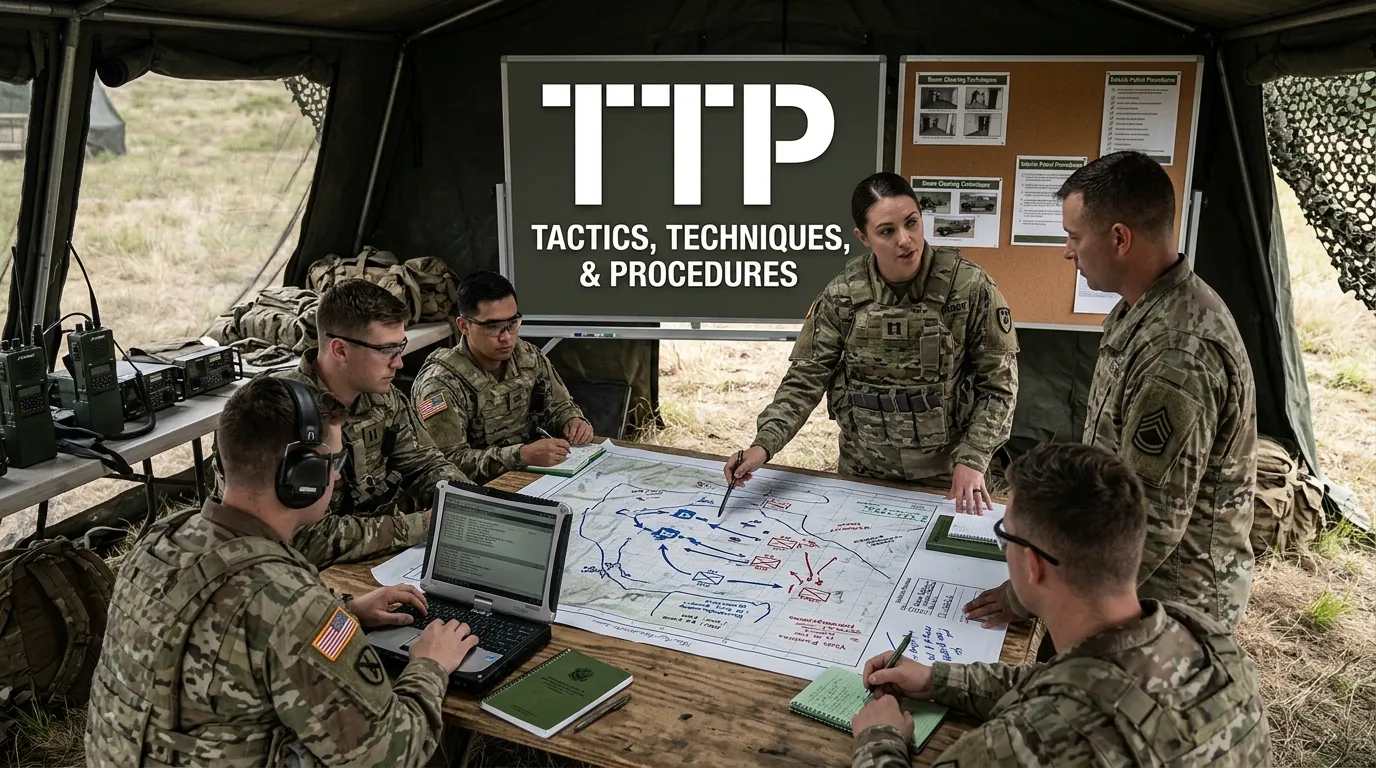
The military world uses many acronyms and abbreviations to communicate quickly, clearly, and efficiently. These short forms help soldiers, commanders, and defense professionals share important information during training, planning, and operations. One important military term is the TTP military acronym.
The TTP acronym is widely used in military and security environments. It helps describe methods, strategies, and procedures used to complete missions effectively. People search for the TTP military acronym meaning because it appears in military manuals, training materials, intelligence reports, and operational discussions.
Understanding military acronyms like TTP helps learners, defense students, and professionals better understand military communication and planning systems.
What Does TTP Stand For in the Military?
The most common meaning of TTP is:
TTP = Tactics, Techniques, and Procedures
TTP refers to the methods and guidelines used to perform military tasks and operations.
Breaking Down the TTP Acronym
| Letter | Word | Meaning |
|---|---|---|
| T | Tactics | Plans and methods used to achieve objectives |
| T | Techniques | Specific ways of performing actions |
| P | Procedures | Standard steps or processes |
What Are Tactics, Techniques, and Procedures?
1. Tactics
Tactics are the overall approaches used to accomplish a mission.
They involve:
- Planning
- Decision-making
- Coordinating actions
Tactics answer the question:
“What approach should be used?”
2. Techniques
Techniques are specific skills or methods used during an operation.
They explain:
“How is the action performed?”
3. Procedures
Procedures are established steps that guide actions.
They provide consistency and help teams work together.
Why Are TTPs Important?
Military organizations use TTPs because they help:
- Improve teamwork
- Standardize training
- Increase efficiency
- Share knowledge
- Prepare for different situations
TTPs allow units to learn from experience and improve their performance.
TTP in Military Training
During training, personnel study TTPs to understand:
- Mission planning
- Communication methods
- Equipment use
- Team coordination
- Operational standards
Training helps members respond effectively to different scenarios.
TTP vs SOP
TTP is often compared with SOP.
| Acronym | Meaning | Purpose |
|---|---|---|
| TTP | Tactics, Techniques, and Procedures | Flexible methods and approaches |
| SOP | Standard Operating Procedure | Fixed step-by-step instructions |
TTPs can change based on the situation, while SOPs are usually more standardized.
Other Meanings of TTP
Although Tactics, Techniques, and Procedures is the common military meaning, TTP can also mean different things.
| Acronym | Full Form | Context |
|---|---|---|
| TTP | Tactics, Techniques, and Procedures | Military/Security |
| TTP | Time to Process | General/Technology |
| TTP | Technology Transfer Program | Business/Research |
| TTP | Throughput | Networking/Technology |
Common Mistakes With TTP
1. Confusing TTP With SOP
Both relate to processes, but they are not identical.
2. Thinking TTP Is Only Military
TTP is also used in cybersecurity, law enforcement, and business planning.
3. Ignoring Context
The meaning of TTP depends on the field where it appears.
Frequently Asked Questions (FAQ)
What does TTP mean in the military?
TTP means Tactics, Techniques, and Procedures.
Why does the military use TTPs?
They help standardize operations, training, and decision-making.
Is TTP the same as SOP?
No. TTP provides methods and approaches, while SOP provides standard instructions.
How is TTP pronounced?
It is usually pronounced as individual letters:
T-T-P
Conclusion
The TTP military acronym stands for Tactics, Techniques, and Procedures, a key concept used in military planning, training, and operations. TTPs help military teams organize actions, improve communication, and adapt to different situations.
By understanding TTP, people can better understand how military organizations develop strategies, train personnel, and improve operational effectiveness. Although TTP is strongly connected with defense, the concept is also used in other fields where structured methods and processes are important.


