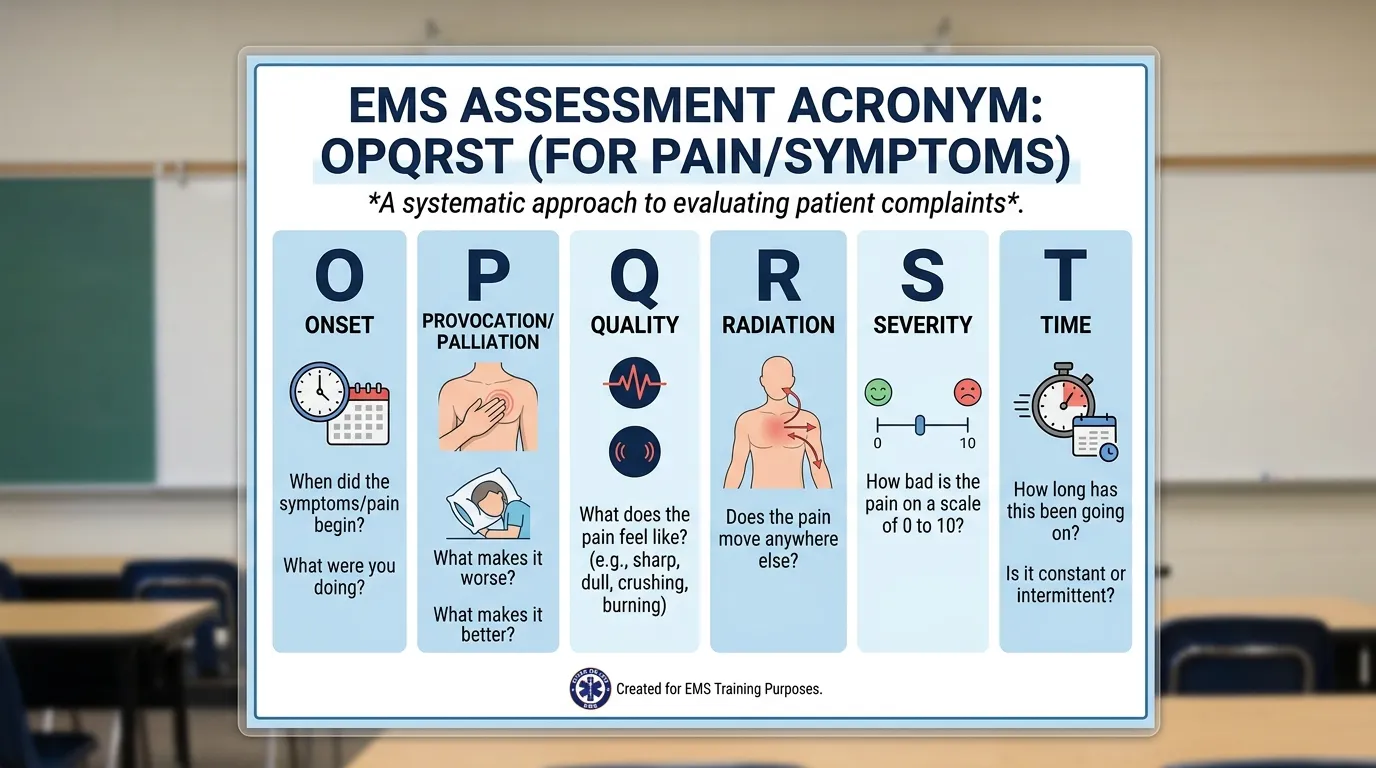
In emergency medical situations, collecting patient information quickly and correctly is very important. Paramedics, first responders, and healthcare workers use memory tools called acronyms to remember key steps during patient assessment.
One of the most important tools in emergency care is the EMS SAMPLE acronym. It helps medical professionals gather essential patient history in a structured and fast way.
People search for the EMS SAMPLE acronym because it is widely used in first aid training, ambulance services, and emergency response systems. It ensures that no important medical detail is missed during critical situations.
What Does EMS SAMPLE Stand For?
The SAMPLE acronym used in EMS (Emergency Medical Services) stands for:
SAMPLE = Signs & Symptoms, Allergies, Medications, Past Medical History, Last Oral Intake, Events
When used in EMS, it is often called EMS SAMPLE history.
Breaking Down EMS SAMPLE Acronym
| Letter | Word | Meaning |
|---|---|---|
| S | Signs & Symptoms | What the patient feels or shows |
| A | Allergies | Any known allergies |
| M | Medications | Drugs the patient is taking |
| P | Past Medical History | Previous illnesses or conditions |
| L | Last Oral Intake | Last food or drink consumed |
| E | Events | What happened before the emergency |
What Does EMS Mean?
EMS = Emergency Medical Services
EMS refers to the system that provides urgent medical care, including:
- Ambulances
- Paramedics
- Emergency responders
- Pre-hospital care teams
How EMS Uses SAMPLE
In emergency situations, EMS workers use SAMPLE to quickly understand a patient’s condition.
Example Questions:
- S: “What symptoms are you feeling?”
- A: “Do you have any allergies?”
- M: “Are you taking any medication?”
- P: “Do you have any medical history?”
- L: “When did you last eat or drink?”
- E: “What caused this situation?”
Why EMS SAMPLE Is Important
The EMS SAMPLE acronym helps because it:
- Saves time during emergencies
- Ensures complete patient history
- Helps doctors make fast decisions
- Reduces risk of missing important details
- Improves patient safety
SAMPLE vs EMS SAMPLE
| Term | Meaning |
|---|---|
| SAMPLE | General medical history tool |
| EMS SAMPLE | SAMPLE used specifically in Emergency Medical Services |
Real-Life Example
A patient is brought into an ambulance after an accident.
The paramedic uses SAMPLE:
- S: Patient has chest pain
- A: No known allergies
- M: Takes blood pressure medicine
- P: History of heart disease
- L: Ate 2 hours ago
- E: Fell while walking
This helps doctors treat the patient faster and more accurately.
Common Mistakes
1. Forgetting the Order
Each letter must be followed in sequence for proper assessment.
2. Skipping Questions
Every part of SAMPLE gives important medical information.
3. Confusing EMS and SAMPLE
EMS is the system, SAMPLE is the assessment tool.
FAQ About EMS SAMPLE Acronym
What does EMS SAMPLE stand for?
It stands for Signs & Symptoms, Allergies, Medications, Past Medical History, Last Oral Intake, and Events.
What does EMS mean?
EMS means Emergency Medical Services.
Why is SAMPLE used in EMS?
To collect fast and complete patient history in emergencies.
Is SAMPLE used by paramedics?
Yes, it is widely used by paramedics and emergency responders.
Conclusion
The EMS SAMPLE acronym is an essential tool in emergency medicine that helps healthcare professionals quickly gather important patient information. By using Signs & Symptoms, Allergies, Medications, Past Medical History, Last Oral Intake, and Events, EMS teams can make faster and safer decisions.
This structured approach improves communication, reduces mistakes, and plays a vital role in saving lives during emergencies.


