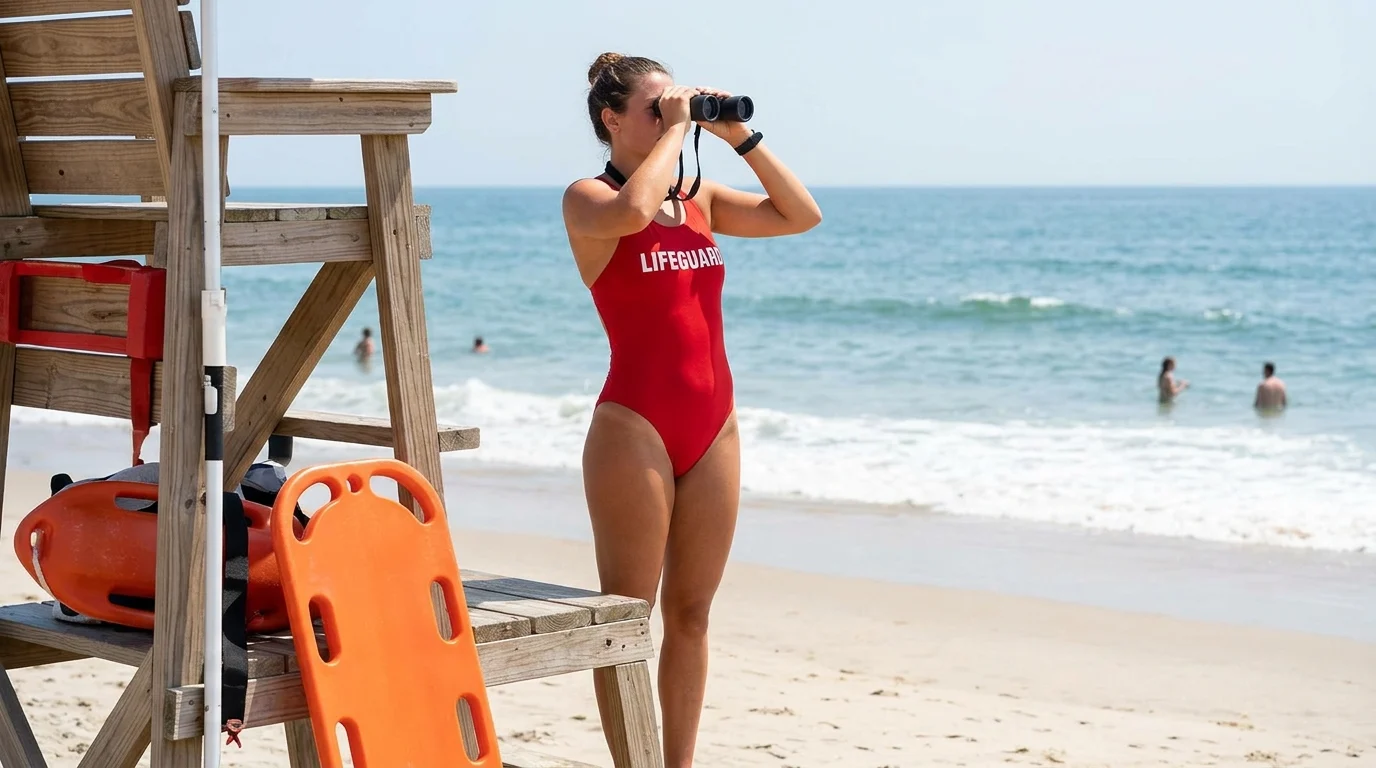
Lifeguards are trained professionals responsible for keeping swimmers safe, preventing accidents, and responding quickly during emergencies. To communicate clearly and act fast, lifeguards use lifeguard acronyms during training, rescues, first aid, and emergency response.
These acronyms are commonly taught in swimming programs, rescue certification courses, first aid classes, and aquatic safety training.
What Are Lifeguard Acronyms?
Lifeguard acronyms are shortened safety and rescue terms used to help lifeguards remember emergency procedures, rescue steps, and communication protocols.
They are commonly used in:
- Pool safety
- Beach patrol
- Water rescue training
- CPR certification
- Emergency medical response
For example:
- CPR = Cardiopulmonary Resuscitation
- AED = Automated External Defibrillator
- EMS = Emergency Medical Services
Common Lifeguard Acronyms and Meanings
| Acronym | Full Form | Meaning | Usage Context |
|---|---|---|---|
| CPR | Cardiopulmonary Resuscitation | Emergency chest compressions and rescue breathing | Medical emergency |
| AED | Automated External Defibrillator | Device that restores heart rhythm | Cardiac emergency |
| EMS | Emergency Medical Services | Professional emergency responders | Rescue response |
| PPE | Personal Protective Equipment | Safety gear for responders | Health & safety |
| ABC | Airway, Breathing, Circulation | Basic emergency assessment | First aid |
| RICE | Rest, Ice, Compression, Elevation | Injury treatment method | First aid |
| SAMPLE | Signs, Allergies, Medications, Past history, Last meal, Events | Patient assessment | Medical response |
| AVPU | Alert, Voice, Pain, Unresponsive | Consciousness check | Emergency care |
| PPE | Personal Protective Equipment | Gloves, masks, protective gear | Safety |
| BLS | Basic Life Support | Emergency life-saving care | Rescue training |
| O₂ | Oxygen | Emergency oxygen support | Medical care |
| EAP | Emergency Action Plan | Organized emergency response steps | Facility safety |
Emergency Response Acronyms
CPR (Cardiopulmonary Resuscitation)
Used when someone stops breathing or their heart stops.
It includes:
- Chest compressions
- Rescue breathing
- Maintaining blood circulation
AED (Automated External Defibrillator)
A portable device used during cardiac emergencies to restore normal heart rhythm.
EMS (Emergency Medical Services)
Professional responders such as ambulance teams and paramedics.
Patient Assessment Acronyms
ABC
One of the first assessments during emergencies:
- A = Airway
- B = Breathing
- C = Circulation
AVPU
Used to check consciousness:
- A = Alert
- V = Responds to Voice
- P = Responds to Pain
- U = Unresponsive
SAMPLE
Used to gather medical history:
- S = Signs and symptoms
- A = Allergies
- M = Medications
- P = Past medical history
- L = Last meal
- E = Events leading to injury
Injury Treatment Acronyms
RICE
Used for minor injuries:
- R = Rest
- I = Ice
- C = Compression
- E = Elevation
PPE
Protective equipment used during rescue:
- Gloves
- Face shields
- Masks
Lifeguard Training Acronyms
BLS (Basic Life Support)
Core emergency care taught to lifeguards.
EAP (Emergency Action Plan)
Step-by-step plan for handling emergencies at pools or beaches.
Why Lifeguard Acronyms Are Important
Lifeguard acronyms are used because they:
- Help rescuers remember procedures quickly
- Improve communication during emergencies
- Reduce response time
- Standardize rescue training
- Increase safety for victims and rescuers
Common Mistakes in Lifeguard Acronyms
1. Mixing up assessment steps
ABC must always be checked first.
2. Delayed activation of EMS
Calling professional help quickly is critical.
3. Skipping protective equipment
PPE protects both rescuer and victim.
Real-Life Examples
Pool Emergency
“Victim unresponsive—start CPR and bring AED.”
Injury Response
“Apply RICE for ankle injury.”
Patient Assessment
“Use AVPU and SAMPLE before EMS arrives.”
Simple Memory Guide
- CPR = Life-saving compressions
- AED = Heart shock device
- EMS = Emergency responders
- ABC = Basic body check
- AVPU = Consciousness test
- RICE = Injury treatment
Final Summary
Lifeguard acronyms are essential tools in water safety, rescue training, and emergency medical response. From CPR and AED to ABC, AVPU, and SAMPLE, these abbreviations help lifeguards act quickly, communicate clearly, and save lives.
Understanding these terms improves safety awareness and prepares both professionals and learners for real-life emergencies.