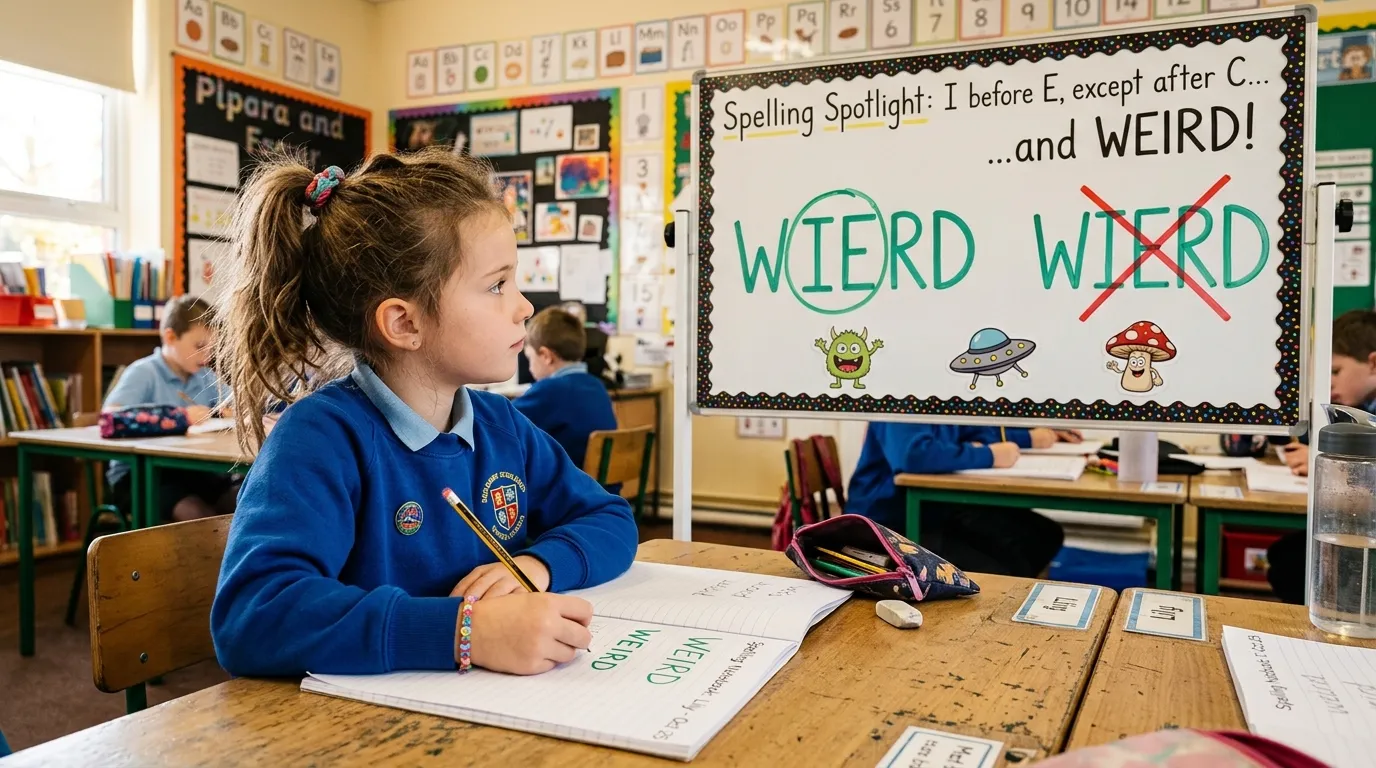
Have you ever wondered whether the correct spelling is weird or wierd? You’re not alone. This is one of the most commonly misspelled words in English because it seems to break the familiar spelling rule, “i before e except after c.” Many people accidentally write wierd, but only one spelling is correct in standard English.
The correct spelling is weird. It is an adjective that means strange, unusual, unexpected, or difficult to explain. It is widely used in everyday conversations, books, movies, social media, and professional writing.
The spelling wierd is incorrect. It is a common misspelling caused by reversing the letters “e” and “i.” Standard English dictionaries recognize only weird as the correct spelling.
In this guide, you’ll learn the correct spelling, meaning, pronunciation, grammar rules, US vs. UK usage, examples, common mistakes, memory tricks, and frequently asked questions about weird or wierd.
Quick Answer
| Spelling | Correct? |
|---|---|
| ✅ Weird | Correct |
| ❌ Wierd | Incorrect |
Weird means strange, unusual, odd, or unexpected.
Examples
- That was a weird dream.
- He has a weird sense of humor.
- The noise sounded weird.
What Does “Weird” Mean?
Weird is an adjective.
It describes something that is unusual, strange, surprising, or difficult to understand.
Examples
- The movie had a weird ending.
- She heard a weird sound.
- That’s a weird idea.
- The weather has been weird lately.
Why Is “Wierd” Incorrect?
The spelling wierd is incorrect because the letters are in the wrong order.
Correct:
Weird
Incorrect:
❌ Wierd
Although many English words follow the rule “i before e,” weird is a well-known exception. The correct order is “ei.”
No standard English dictionary accepts wierd.
Grammar Role of Weird
Weird functions as an adjective.
Common Expressions
- Weird feeling
- Weird dream
- Weird noise
- Weird experience
- Weird behavior
- Weird situation
Examples
- I had a weird dream.
- That was a weird coincidence.
- His behavior seemed weird.
Weird in American English
American English uses weird.
Examples
- That movie was weird.
- She heard a weird sound.
- It feels weird today.
- He has a weird hobby.
Weird in British English
British English also uses weird.
Examples
- The weather has been weird lately.
- She had a weird experience.
- That’s a weird story.
- He made a weird comment.
There is no spelling difference between American and British English.
Weird vs Wierd
| Feature | Weird | Wierd |
|---|---|---|
| Correct spelling | ✅ Yes | ❌ No |
| Dictionary word | Yes | No |
| Meaning | Strange or unusual | No meaning |
| Part of speech | Adjective | Incorrect spelling |
| American English | Yes | No |
| British English | Yes | No |
Pronunciation
Weird
UK IPA: /wɪəd/
US IPA: /wɪrd/
Pronunciation:
WEERD
Even though it is pronounced like “weerd,” the correct spelling is weird.
Common Uses of “Weird”
Feelings
- Weird feeling
- Weird mood
Sounds
- Weird noise
- Weird voice
Experiences
- Weird dream
- Weird coincidence
Everyday Conversation
- That’s weird.
- It looks weird.
Weird vs Similar Words
| Word | Meaning |
|---|---|
| Weird | Strange or unusual |
| Strange | Different from normal |
| Odd | Unusual or unexpected |
| Unusual | Not common |
| Bizarre | Extremely strange |
Common Mistakes
Incorrect
❌ That was a wierd dream.
Correct
✅ That was a weird dream.
Incorrect
❌ He made a wierd comment.
Correct
✅ He made a weird comment.
Incorrect
❌ The noise sounded wierd.
Correct
✅ The noise sounded weird.
Incorrect
❌ She had a wierd experience.
Correct
✅ She had a weird experience.
Real-Life Examples
Everyday Life
- That’s a weird situation.
- I had a weird feeling.
Movies
- The ending was weird.
- The character acted weird.
School
- He asked a weird question.
- The experiment produced weird results.
Social Media
- That video is weird.
- People shared weird stories online.
American English Example Sentences
- That was a weird dream.
- The movie was weird.
- He has a weird hobby.
- I heard a weird sound.
- The weather feels weird today.
- She made a weird face.
- It was a weird coincidence.
- That’s a weird idea.
- The situation became weird.
- Everyone noticed the weird smell.
British English Example Sentences
- That was a weird dream.
- The weather has been weird lately.
- He told a weird story.
- She heard a weird noise.
- The experience felt weird.
- It was a weird coincidence.
- That’s a weird idea.
- The atmosphere seemed weird.
- Everyone noticed the weird smell.
- The ending was weird.
Easy Memory Tricks
Remember “WE”
The word starts with:
WE
Then add:
IRD
WE + IRD = Weird
Think “Weird Exception”
Remember that weird is one of the famous exceptions to the rule:
“i before e except after c.”
So always write:
WEIRD
Practice
Write it three times:
Weird
Weird
Weird
Frequently Asked Questions
Is weird or wierd correct?
Weird is the correct spelling.
Is wierd a real word?
No. It is a common spelling mistake.
What does weird mean?
It means strange, unusual, odd, or unexpected.
Is weird an adjective?
Yes.
How do you spell weird?
W-E-I-R-D
Is the spelling different in British and American English?
No. Both use weird.
How do you pronounce weird?
WEERD
People Also Ask
Why do people spell weird as wierd?
Because many people follow the rule “i before e,” but weird is an exception. The correct spelling is weird with “ei.”
Is weird used in formal writing?
Yes. It is common in everyday English and can also appear in books, journalism, and informal professional writing. In highly formal writing, words like unusual, strange, or atypical may sometimes be preferred.
What’s the easiest way to remember weird?
Remember:
WE + IRD = Weird
Or think:
Weird is a famous “ei” exception.
What’s the difference between weird and strange?
Both mean unusual, but weird often suggests something odd, mysterious, or unexpected, while strange is a broader word for anything unfamiliar or unusual.
Conclusion
If you’re choosing between weird and wierd, the correct spelling is weird. Wierd is a common spelling mistake caused by reversing the letters “e” and “i.”
Weird is an adjective that means strange, unusual, odd, or unexpected. It is the standard spelling in both American and British English. A simple way to remember it is that weird is one of the famous exceptions to the “i before e” rule, so it is always spelled W-E-I-R-D.


