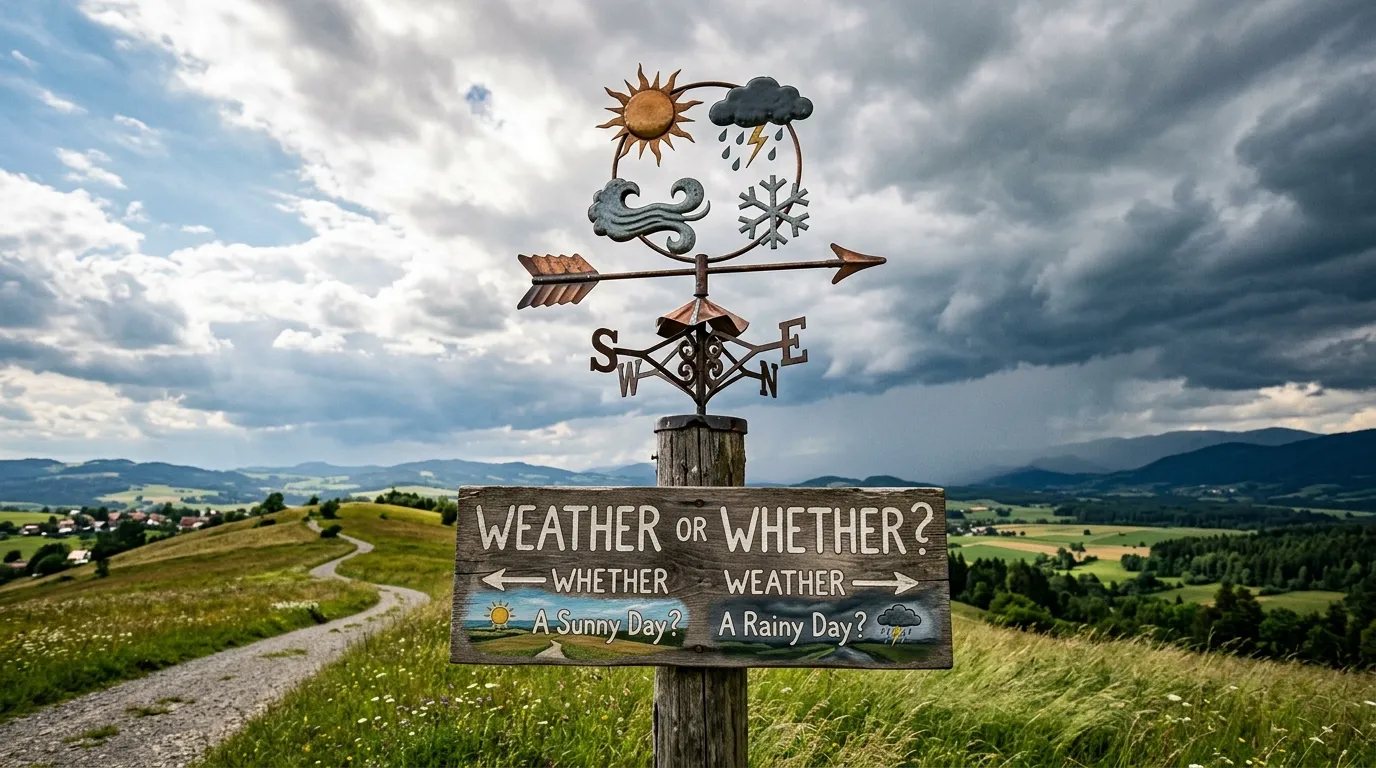
Have you ever wondered whether the correct spelling is weather or wheather? You’re not alone. This is a common English spelling mistake because the word’s pronunciation can make it seem like it contains an extra “h.” Many people accidentally write wheather, but only one spelling is correct in standard English.
The correct spelling is weather. It is a noun that refers to the state of the atmosphere, including conditions such as sunshine, rain, wind, snow, temperature, and storms. It can also be used as a verb, meaning to withstand or survive difficult conditions.
The spelling wheather is incorrect. It is a common misspelling caused by adding an unnecessary “h.” Standard English dictionaries recognize only weather as the correct spelling.
In this guide, you’ll learn the correct spelling, meaning, pronunciation, grammar rules, US vs. UK usage, examples, common mistakes, memory tricks, and frequently asked questions about weather or wheather.
Quick Answer
| Spelling | Correct? |
|---|---|
| ✅ Weather | Correct |
| ❌ Wheather | Incorrect |
Weather means the condition of the atmosphere at a particular time and place.
Examples
- The weather is beautiful today.
- We checked the weather forecast.
- Bad weather delayed the flight.
What Does “Weather” Mean?
Weather is usually a noun.
It refers to atmospheric conditions such as:
- Rain
- Sunshine
- Snow
- Wind
- Temperature
- Storms
Examples
- The weather is warm today.
- Cold weather is expected tomorrow.
- The weather changed quickly.
As a verb, weather means to survive or withstand difficult conditions.
Example
- The old house weathered the storm.
Why Is “Wheather” Incorrect?
The spelling wheather is incorrect because the correct word does not contain an extra “h” after “w.”
Correct:
Weather
Incorrect:
❌ Wheather
No standard English dictionary accepts wheather as the correct spelling.
Grammar Role of Weather
Weather can function as both a noun and a verb.
As a Noun
- The weather is sunny.
- The weather forecast predicts rain.
As a Verb
- The ship weathered the storm.
- She weathered many challenges.
Weather in American English
American English uses weather.
Examples
- The weather is hot today.
- Check the weather before traveling.
- The storm brought severe weather.
- They weathered the crisis.
Weather in British English
British English also uses weather.
Examples
- The weather is lovely today.
- Heavy weather caused delays.
- We enjoyed the warm weather.
- The building weathered many winters.
There is no spelling difference between American and British English.
Weather vs Wheather
| Feature | Weather | Wheather |
|---|---|---|
| Correct spelling | ✅ Yes | ❌ No |
| Dictionary word | Yes | No |
| Meaning | Atmospheric conditions | No meaning |
| Part of speech | Noun / Verb | Incorrect spelling |
| American English | Yes | No |
| British English | Yes | No |
Pronunciation
Weather
UK IPA: /ˈweð.ə(r)/
US IPA: /ˈweð.ɚ/
Pronunciation:
WETH-er
The pronunciation does not include an extra “h” after the “w.”
Common Uses of “Weather”
Forecasting
- Weather forecast
- Weather report
- Weather warning
Nature
- Sunny weather
- Rainy weather
- Stormy weather
Travel
- Bad weather delayed the flight.
- Weather conditions improved.
Expressions
- Under the weather
- Weather permitting
- Fair-weather friend
Weather vs Similar Words
| Word | Meaning |
|---|---|
| Weather | Atmospheric conditions |
| Climate | Long-term weather patterns |
| Forecast | Prediction of future weather |
| Temperature | Measure of heat or cold |
| Season | Division of the year |
Common Mistakes
Incorrect
❌ The wheather is nice today.
Correct
✅ The weather is nice today.
Incorrect
❌ Check the wheather forecast.
Correct
✅ Check the weather forecast.
Incorrect
❌ Bad wheather delayed the flight.
Correct
✅ Bad weather delayed the flight.
Incorrect
❌ We enjoyed the warm wheather.
Correct
✅ We enjoyed the warm weather.
Real-Life Examples
Daily Life
- The weather is perfect for a walk.
- We stayed indoors because of the weather.
Travel
- The flight was delayed due to bad weather.
- Always check the weather before traveling.
News
- Severe weather affected the region.
- The weather forecast predicts snow.
Nature
- Warm weather attracts tourists.
- Cold weather can freeze lakes.
American English Example Sentences
- The weather is sunny today.
- Check the weather forecast before leaving.
- Bad weather canceled the game.
- We enjoyed the warm weather.
- The storm brought severe weather.
- Weather conditions improved overnight.
- The airplane was delayed by bad weather.
- The farmers welcomed the rainy weather.
- The weather changed quickly.
- They weathered the difficult situation.
British English Example Sentences
- The weather is lovely today.
- Check the weather forecast.
- Wet weather affected the match.
- We enjoyed the fine weather.
- The storm brought severe weather.
- The weather changed suddenly.
- Bad weather delayed the train.
- Farmers welcomed the wet weather.
- The weather improved by afternoon.
- The old building weathered many storms.
Easy Memory Tricks
Think of “We”
The word starts with:
We + ather = Weather
There is no extra “h.”
Remember the Forecast
You always hear:
Weather forecast
Never:
❌ Wheather forecast
Practice
Write it three times:
Weather
Weather
Weather
Frequently Asked Questions
Is weather or wheather correct?
Weather is the correct spelling.
Is wheather a real word?
No. It is a common spelling mistake.
What does weather mean?
It means the condition of the atmosphere, including sunshine, rain, wind, snow, and temperature.
Is weather a noun or a verb?
It can be both. It is usually a noun, but it can also be a verb meaning to survive difficult conditions.
How do you spell weather?
W-E-A-T-H-E-R
Is the spelling different in British and American English?
No. Both use weather.
How do you pronounce weather?
WETH-er
People Also Ask
Why do people spell weather as wheather?
Because the pronunciation can make it seem like an extra “h” belongs after the “w.” However, the correct spelling is weather.
Is weather used in formal writing?
Yes. It is commonly used in news reports, science, education, travel, business, and everyday English.
What’s the easiest way to remember weather?
Think of the common phrase:
Weather forecast
It always uses the spelling weather, never wheather.
What’s the difference between weather and climate?
Weather refers to short-term atmospheric conditions, while climate refers to the average weather patterns of a place over many years.
Conclusion
If you’re choosing between weather and wheather, the correct spelling is weather. Wheather is a common spelling mistake caused by adding an unnecessary “h.”
Weather is a noun that refers to atmospheric conditions such as sunshine, rain, wind, snow, and temperature. It can also be used as a verb meaning to withstand difficult conditions. It is the standard spelling in both American and British English. A simple way to remember it is to think of the phrase “weather forecast,” which always uses the correct spelling weather.


