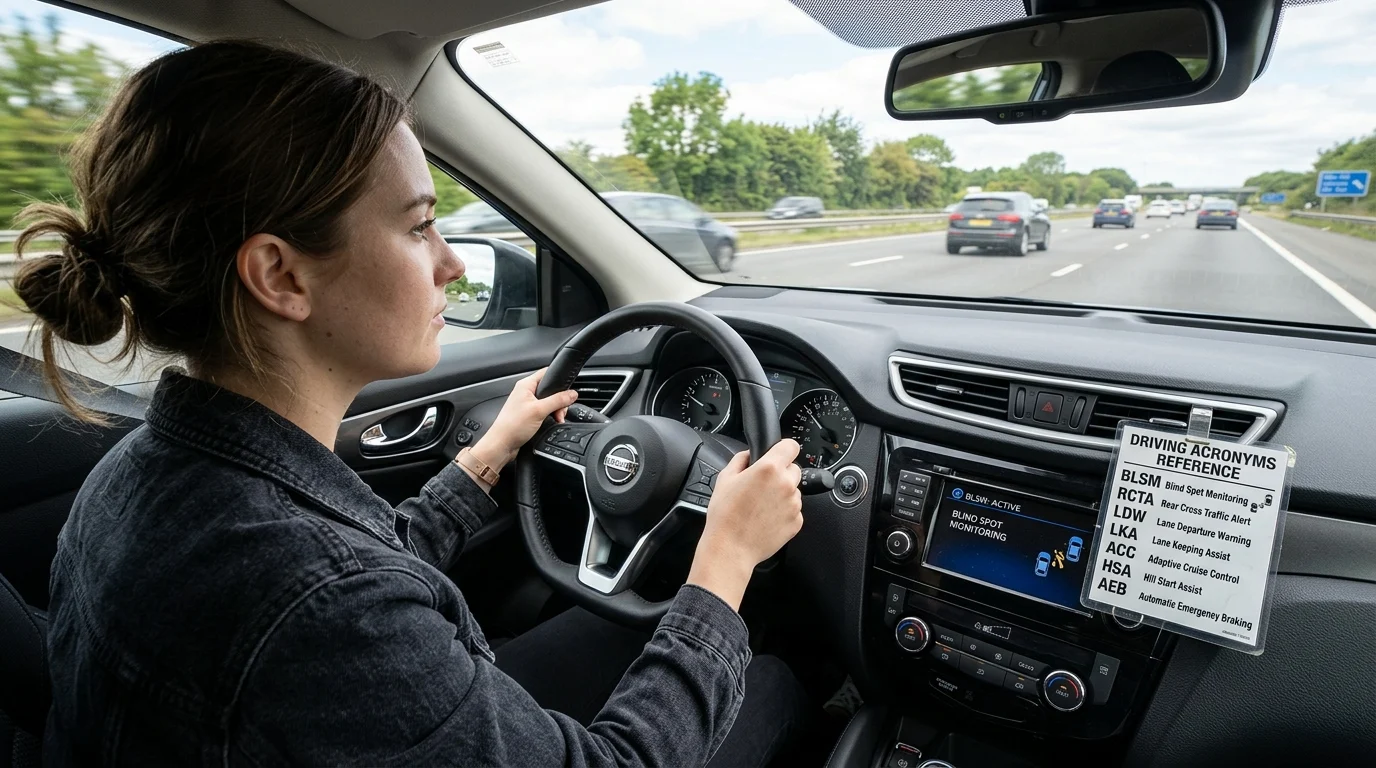
Driving acronyms are abbreviations used in driver education, road safety, traffic laws, vehicle operation, and defensive driving. These terms help drivers remember important safety rules, vehicle systems, and licensing concepts.
Whether you’re a new driver, preparing for a driving test, or improving your road knowledge, understanding driving acronyms can make learning easier.
What Are Driving Acronyms?
Driving acronyms are shortened terms used to simplify driving instructions, safety procedures, and vehicle-related concepts.
They are commonly used in:
- Driver education courses
- Driving license exams
- Defensive driving programs
- Road safety training
- Vehicle manuals
For example:
- ABS = Anti-lock Braking System
- VIN = Vehicle Identification Number
- SIPDE = Scan, Identify, Predict, Decide, Execute
Common Driving Acronyms List
| Acronym | Full Form | Meaning |
|---|---|---|
| ABS | Anti-lock Braking System | Prevents wheel lock during braking |
| VIN | Vehicle Identification Number | Unique vehicle ID |
| DMV | Department of Motor Vehicles | Driver licensing agency |
| MPG | Miles Per Gallon | Fuel efficiency measurement |
| PSI | Pounds per Square Inch | Tire pressure measurement |
| SIPDE | Scan, Identify, Predict, Decide, Execute | Defensive driving process |
| SMOG | Smoke and Fog | Vehicle emissions testing |
| ESC | Electronic Stability Control | Improves vehicle control |
| TPMS | Tire Pressure Monitoring System | Monitors tire pressure |
| AWD | All-Wheel Drive | Power to all wheels |
| 4WD | Four-Wheel Drive | Enhanced traction system |
| GPS | Global Positioning System | Navigation technology |
| DUI | Driving Under the Influence | Impaired driving offense |
| ETA | Estimated Time of Arrival | Travel time estimate |
Defensive Driving Acronyms
SIPDE
A popular defensive driving strategy:
- S = Scan
- I = Identify
- P = Predict
- D = Decide
- E = Execute
This method helps drivers anticipate and avoid hazards.
Vehicle Safety Acronyms
ABS (Anti-lock Braking System)
Prevents wheels from locking during sudden braking.
ESC (Electronic Stability Control)
Helps maintain vehicle control on slippery roads.
TPMS (Tire Pressure Monitoring System)
Warns drivers when tire pressure is low.
Vehicle Identification Acronyms
VIN
A unique code assigned to every vehicle for identification and registration purposes.
DMV
The government agency responsible for licensing drivers and registering vehicles in many regions.
Fuel and Performance Acronyms
MPG
Measures how far a vehicle travels using one gallon of fuel.
PSI
Used to measure tire pressure for safety and fuel efficiency.
Navigation and Travel Acronyms
GPS
Satellite-based navigation system used for route guidance.
ETA
Estimated arrival time at a destination.
Legal Driving Acronyms
DUI
Refers to operating a vehicle while impaired by alcohol or drugs.
Understanding DUI laws is important for road safety and legal compliance.
Why Driving Acronyms Are Important
Driving acronyms help:
- Improve road safety awareness
- Simplify driver education
- Enhance vehicle maintenance knowledge
- Support defensive driving skills
- Prepare drivers for licensing exams
Common Mistakes with Driving Acronyms
Confusing AWD and 4WD
Both improve traction, but they function differently.
Ignoring TPMS Alerts
Low tire pressure can affect handling and safety.
Forgetting SIPDE Steps
Skipping hazard awareness can increase accident risk.
Real-Life Examples
Driver Training
“Use the SIPDE process to evaluate traffic situations.”
Vehicle Dashboard
“The TPMS warning light indicates low tire pressure.”
Road Trip Planning
“Check your GPS and ETA before departure.”
Quick Memory Guide
- ABS = Braking safety system
- VIN = Vehicle ID number
- SIPDE = Defensive driving method
- TPMS = Tire pressure monitor
- GPS = Navigation system
- DUI = Impaired driving offense
Final Summary
Driving acronyms are essential tools for learning road safety, vehicle operation, and defensive driving. Terms like ABS, VIN, SIPDE, TPMS, GPS, and DUI help drivers understand important concepts and become safer, more confident road users.
Learning these acronyms can improve driving skills, exam preparation, and overall road awareness.


